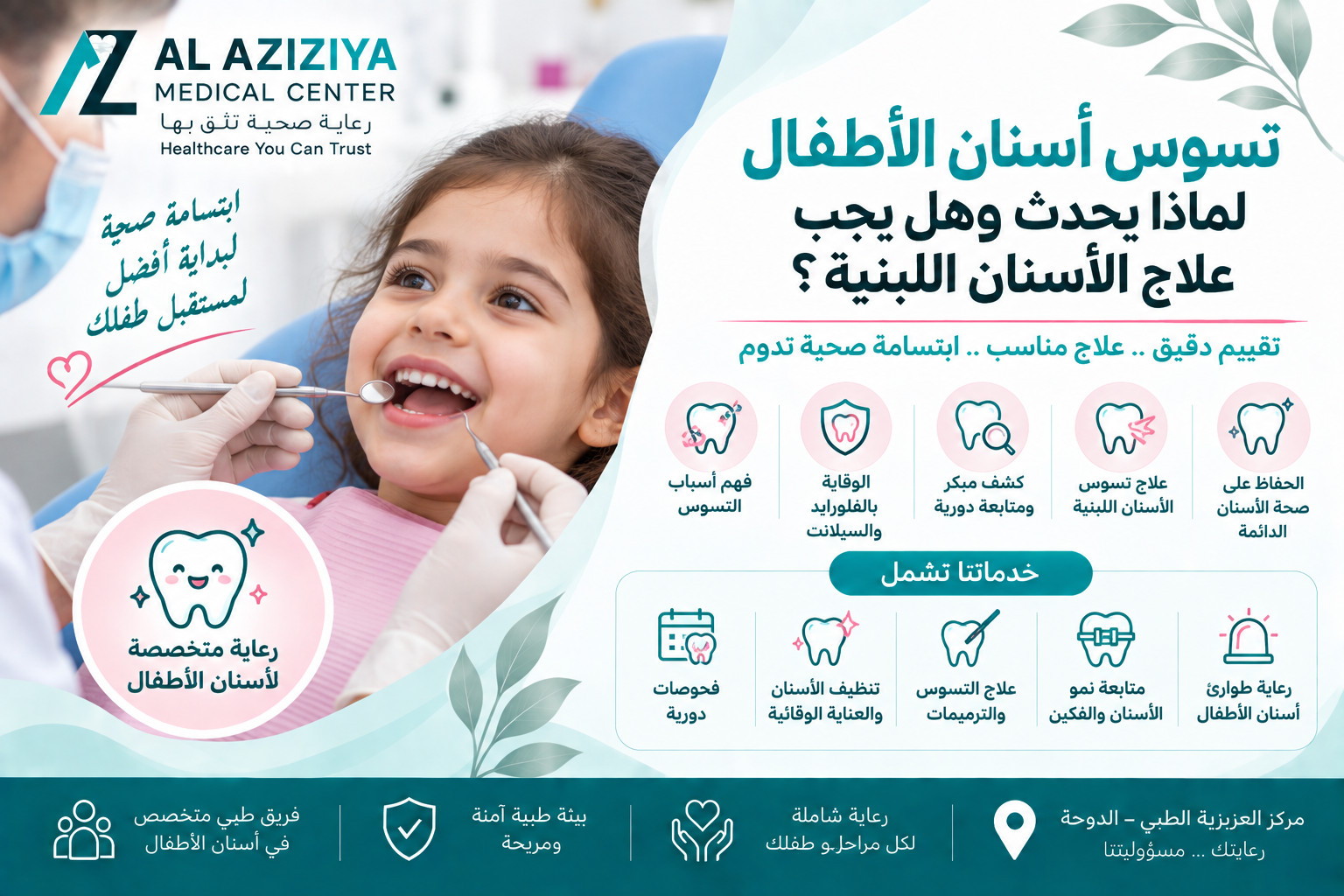
Tooth Decay in Children in Doha: Why Does It Happen and Should Baby Teeth Be Treated?
Learn why tooth decay occurs in children, why baby teeth may need treatment, how fluoride and sealants help prevent cavities, and when dental pain or swelling needs prompt assessment.
Tooth decay is one of the most common oral health problems in children. It may begin as a subtle change that parents do not notice and gradually progress if it is not detected and managed.
Some parents assume that cavities in primary, or baby, teeth do not need treatment because these teeth will eventually fall out. However, primary teeth play important roles in chewing, speech, and maintaining space for developing permanent teeth.
Prevention and early dental assessment can therefore help identify decay before pain, infection, or more complicated treatment becomes necessary.
How Does Tooth Decay Begin in Children?
A thin layer of dental plaque forms on teeth and contains bacteria that use sugars from foods and drinks.
Repeated exposure to sugars allows these bacteria to produce acids that can gradually remove minerals from tooth enamel and begin the process of decay.
Cavities are not usually caused by eating sweets on one occasion. Risk is influenced by how often teeth are exposed to sugars, how long plaque remains on the teeth, oral hygiene, and other individual factors.
What Are Early Signs of Tooth Decay in Children?
Early decay may first appear as a chalky white area or a subtle change in tooth color.
As decay progresses, the affected area may become brown or dark, and the child may develop sensitivity to cold or sweet foods, pain while eating, or spontaneous toothache.
Some children have cavities without pain, which is why regular dental examinations remain useful even when no symptoms are present.
Does Every Dark Spot on a Tooth Mean Decay?
Not necessarily. Surface stains and other changes in tooth color can have several causes.
A pediatric dentist can examine the tooth and determine whether the area is a stain or represents tooth decay that needs monitoring or treatment.
Waiting for pain is not ideal because cavities may progress before symptoms become noticeable.
Why Do Baby Teeth Need Treatment?
Primary teeth help children chew food and speak and also help maintain space for permanent teeth as they develop.
If a baby tooth develops deep decay, pain, or infection and is lost too early, this can affect the child's comfort and may influence dental spacing in some cases.
The pediatric dentist therefore considers the child's age, the depth of decay, the condition of the tooth, and when the tooth is expected to fall out before recommending treatment.
Can Decay in a Baby Tooth Reach the Dental Pulp?
Yes. If decay continues to progress, it can reach the deeper parts of the tooth and tissues close to the dental pulp.
This may lead to significant sensitivity, pain during chewing, spontaneous pain, or pain that disturbs sleep.
More advanced cases can develop swelling or a dental abscess and require prompt dental assessment.
When Does a Child's Toothache Need Prompt Dental Care?
A child should be assessed promptly when dental pain is severe, interferes with sleep or eating, or is associated with swelling of the gum or face.
Fever occurring together with an obvious dental problem also deserves prompt assessment.
Dental injuries caused by falls or trauma should also be evaluated even when the tooth appears normal externally.
How Do Milk and Juice Before Bed Affect Teeth?
Repeated exposure to drinks containing sugars, particularly close to bedtime and after tooth brushing, can increase the risk of tooth decay.
Saliva flow decreases during sleep compared with waking hours, making repeated sugary drinks near bedtime an important factor to consider.
Tooth brushing should therefore form part of the regular bedtime routine, with repeated sweetened drinks after brushing avoided when possible.
Is Natural Juice Better for the Teeth?
Natural juice can also contain sugars and acids, so being natural does not mean it cannot affect the teeth when consumed frequently.
Reducing how often teeth are exposed to sugary drinks and using water as the main drink between meals when appropriate can help support dental health.
How Does Tooth Brushing Help Prevent Cavities?
Regular brushing removes dental plaque and food debris and helps reduce bacterial buildup on the teeth.
Young children usually need help and supervision from a parent because they may not yet have the manual skills needed to clean all tooth surfaces effectively.
As children grow, they can gradually become more independent while parents continue to check that brushing is being performed properly.
Can Fluoride Help Protect Children's Teeth?
Fluoride is used to help strengthen tooth enamel and increase its resistance to decay.
The pediatric dentist can advise on appropriate fluoride use according to the child's age, dental condition, and risk of cavities, including home care and preventive treatments provided in the clinic.
What Are Dental Sealants?
Dental sealants are protective materials placed over the chewing surfaces of selected teeth that have grooves and pits where plaque and food can collect.
They are designed to reduce accumulation in these areas and help lower the risk of tooth decay.
The dentist determines whether sealants are appropriate based on the child's age, tooth anatomy, and individual cavity risk.
How Is Tooth Decay Treated in Children?
Treatment depends on the depth of the cavity, the condition of the tooth, and the child's age.
Some cavities can be treated with fillings after the decayed area is removed. More extensively damaged teeth may require pediatric crowns or additional treatment when decay has reached deeper structures.
The aim is to preserve the tooth and its function when appropriate, relieve discomfort, and prevent further decay or infection.
Does a Decayed Baby Tooth Always Need to Be Removed?
No. Not every decayed primary tooth needs extraction.
When a tooth can be appropriately restored, maintaining it until its natural exfoliation time may be preferable depending on the clinical situation.
If the tooth is severely damaged or cannot be predictably restored, the dentist determines the most appropriate option while considering the child's age, expected tooth replacement, and the possible effect of early tooth loss.
When Should a Child First Visit the Dentist?
Early dental visits when the first teeth appear or during the first year of life can help establish preventive care and give parents guidance on oral hygiene and feeding habits.
The first visit is not only for treating disease. It also allows the dentist to monitor dental development, discuss prevention, and help the child become familiar with the dental environment before a visit is associated with pain.
Why Are Some Children Afraid of the Dentist?
Dental anxiety can be related to a previous painful experience, the way dental treatment is discussed at home, or simply uncertainty about what will happen.
Calm communication, early preventive visits, and care from a dentist experienced in treating children can help make the experience more comfortable.
Dental visits should also not be used as a threat or punishment.
Do Children Need Early Orthodontic Assessment?
Pediatric dental follow-up also includes monitoring the development of the teeth and jaws.
A dentist may identify an alignment or bite concern that requires monitoring or referral for orthodontic assessment at the appropriate time.
Early assessment does not mean that every child will need braces. Its purpose is to identify children who may benefit from monitoring or timely intervention.
Pediatric Dental Care at Al Aziziya Medical Center
The Dental Department at Al Aziziya Medical Center in Doha provides pediatric dental services including regular dental examinations, professional cleaning, preventive treatments, restorative dental care, early assessment of dental and jaw development, and emergency dental care.
Preventive services include fluoride and dental sealants when appropriate to help protect children's teeth and reduce the risk of cavities.
Regular follow-up can help detect tooth decay earlier and establish an age-appropriate treatment and prevention plan while supporting a comfortable dental experience.
Dr. Islam Omran and Pediatric Dental Care
Dr. Islam Omran is a Pediatric Dentist at Al Aziziya Medical Center with more than ten years of experience in children's dental care.
His services include regular dental examinations, professional cleaning, preventive fluoride and sealant treatments, pediatric fillings and crowns, early assessment of teeth and jaw development, and emergency dental care.
His approach emphasizes prevention, early follow-up, and providing dental treatment in a supportive environment for children and their families.
Dr. Heba Hassan and Early Prevention
Dr. Heba Hassan is a Pediatric Dentist at Al Aziziya Medical Center with more than 28 years of dental experience and a strong focus on pediatric preventive care and early intervention.
Her services include regular dental examinations, professional cleaning, fluoride and sealant treatments, pediatric fillings and crowns, and emergency dental care.
Preventive follow-up can help identify oral health problems earlier and support the health of both primary and developing permanent teeth.
Prevention Is Easier Than Waiting for Tooth Pain
Good dental care begins before a child experiences toothache. Effective brushing, reducing frequent sugar exposure, regular dental examinations, and appropriate preventive measures can help lower the risk of cavities progressing.
Primary teeth have important functions throughout childhood and should not be ignored simply because they will eventually be replaced.
At Al Aziziya Medical Center in Doha, the Dental Department provides preventive and restorative pediatric dental care designed to support healthy primary and permanent teeth and long-term oral health habits.