Psoriasis in Doha: How Is It Different From Dry Skin and Eczema and When Should You See a Dermatologist?
Learn about psoriasis symptoms, how it may differ from dry skin and eczema, how it can affect the scalp, nails and joints, and when dermatology assessment is appropriate.
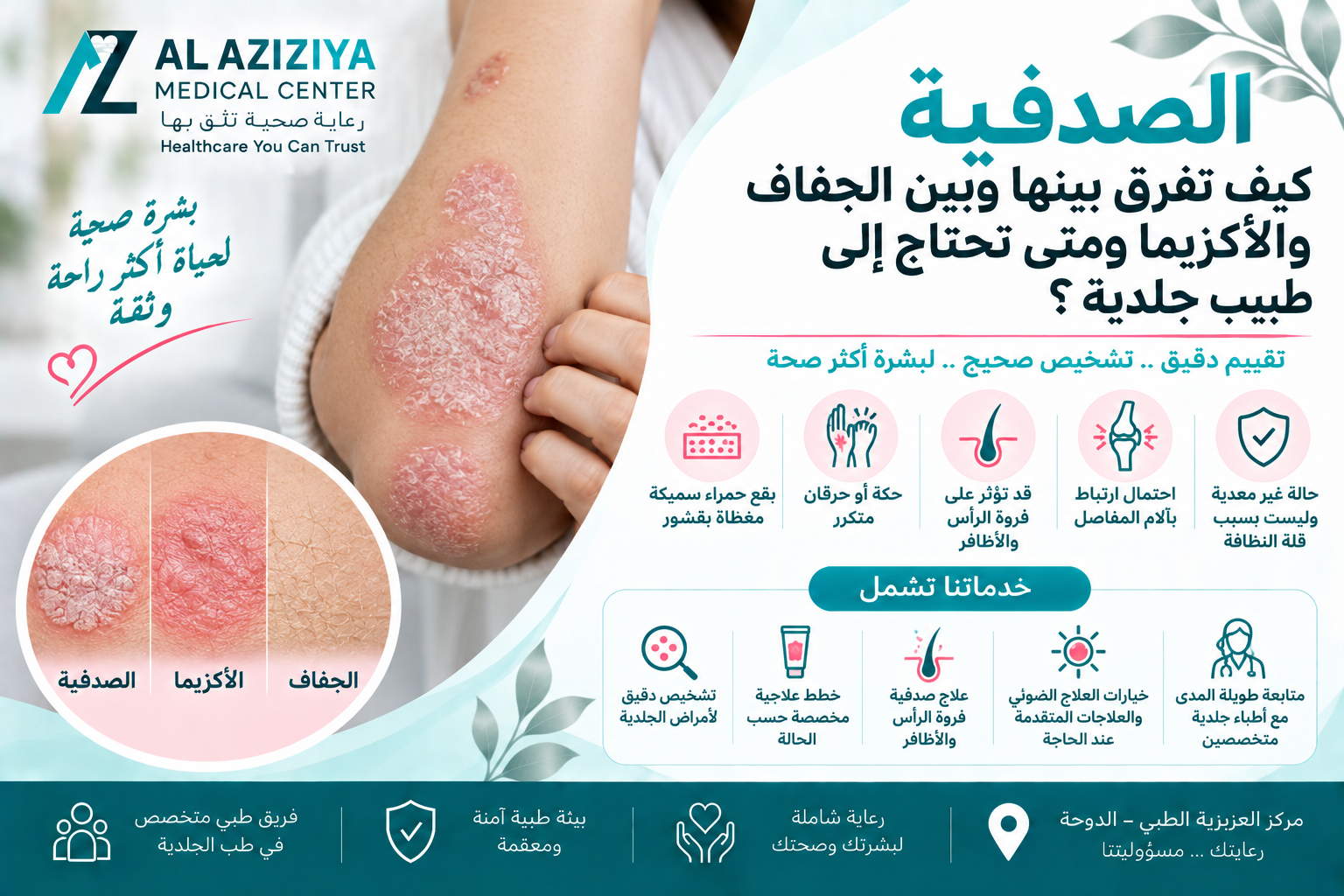
Psoriasis is a chronic inflammatory skin condition that can appear as thick, scaly patches or plaques and may cause itching, burning, soreness, or skin cracking. Its severity and distribution vary considerably between individuals. Some people have only a few small areas, while others develop psoriasis on the scalp, nails, or multiple areas of the body.
Psoriasis is not simply severe dry skin, and it is not a contagious skin infection. Accurate diagnosis is important because eczema, fungal infections, and other inflammatory skin disorders can sometimes look similar.
What Is Psoriasis?
Psoriasis is a chronic inflammatory condition involving abnormal immune activity that causes skin cells to build up more rapidly than usual.
The condition may improve for periods and then return during flare-ups, so symptoms are not necessarily constant.
There are several types of psoriasis, and its appearance can vary according to the type, body area, and individual skin tone.
What Does Psoriasis Look Like?
Plaque psoriasis, the most common form, typically causes raised, thickened and relatively well-defined areas of skin covered with dry scale.
The plaques may appear red, pink, darker, or otherwise different from the surrounding skin depending on skin tone.
Common sites include:
- The elbows.
- The knees.
- The scalp.
- The lower back.
- Other areas depending on the type of psoriasis.
Some people experience itching, burning, soreness, or cracking.
What Is the Difference Between Psoriasis and Ordinary Dry Skin?
Ordinary dry skin commonly causes roughness, flaking, or tightness and may affect broader areas. It often improves with regular moisturization and reduction of factors that dry the skin.
Psoriasis is more likely to form persistent or recurrent plaques that may be thicker and more clearly defined.
However, appearance alone cannot always distinguish psoriasis from severe dryness or other forms of dermatitis, so persistent or unusual scaling may need dermatology assessment.
What Is the Difference Between Psoriasis and Eczema?
Both psoriasis and eczema can cause itching, dryness, inflammation, and changes in skin color, but they are different conditions.
Some forms of psoriasis tend to produce thicker and more clearly defined plaques with visible scale, while significant itching and skin-barrier dysfunction are common features of eczema.
The distribution of the rash also varies with the condition and age. Because there can be considerable overlap in appearance, clinical examination is often more reliable than trying to distinguish the conditions from pictures alone.
Is Psoriasis Contagious?
No. Psoriasis is not a bacterial, viral, or fungal infection and cannot spread from one person to another through touch or normal contact.
This is important because the visible appearance of psoriasis can sometimes lead to unnecessary concern or social avoidance.
Why Do Psoriasis Flare-Ups Come and Go?
Psoriasis can remain relatively quiet for periods and then become more active. Triggers vary between individuals.
Possible triggers for some patients include:
- Stress.
- Cold or dry weather.
- Some infections.
- Skin injury or irritation.
- Smoking in some patients.
- Certain medications in specific situations.
Not every trigger affects every patient, so tracking the circumstances around flare-ups can help identify an individual's pattern.
Can Stress Worsen Psoriasis?
Stress can contribute to psoriasis flare-ups in some people, while psoriasis itself can cause psychological stress because of itching, visible skin changes, disturbed sleep, or its effect on daily life.
Improving sleep, physical activity, and stress management may therefore support overall care but does not replace medical treatment for active psoriasis.
How Does Psoriasis Affect the Scalp?
Scalp psoriasis can range from small areas of fine scale to thick inflamed plaques and may extend beyond the hairline or behind the ears.
It may cause itching, burning, dryness, cracking, or superficial bleeding after scratching.
Temporary hair loss can occur as a result of inflammation, repeated scratching, or forceful scale removal. Gentle scalp care is therefore important.
Is Scalp Psoriasis the Same as Dandruff?
No. Dandruff and scalp psoriasis are different conditions, although both can cause visible flaking.
Psoriasis can cause thicker scale and more distinct inflamed plaques and may extend beyond the scalp margin.
Persistent, severe, itchy, or bleeding scalp scaling should be assessed to determine the correct diagnosis and treatment.
Can Psoriasis Affect the Nails?
Yes. Psoriasis can affect fingernails and toenails.
Possible nail changes include:
- Small pits on the nail surface.
- White, yellow, or brown discoloration.
- Rough or crumbling nails.
- Partial separation of the nail from the nail bed.
- Build-up or thickening beneath the nail.
Some of these features can resemble fungal nail disease or other conditions, so antifungal treatment should not be started solely because of the nail's appearance.
What Is the Relationship Between Psoriasis and Joint Problems?
Some people with psoriasis develop psoriatic arthritis, an inflammatory condition affecting joints and related structures.
Possible warning signs include:
- Persistent pain or swelling in a joint.
- Swelling of an entire finger or toe.
- Significant morning stiffness.
- Heel pain or pain around the Achilles tendon.
- Persistent back pain or stiffness in some patients.
Not every joint pain in a person with psoriasis is psoriatic arthritis, but persistent joint symptoms deserve assessment because early recognition and treatment can help protect joint function.
How Is Psoriasis Diagnosed?
Diagnosis often begins with examination of the skin, scalp, and nails together with a review of the rash pattern, duration, previous flare-ups, family history, and possible triggers.
The clinician may also ask about joint symptoms.
When the appearance is not typical, additional assessment or a small skin biopsy may occasionally be considered to exclude other conditions.
Does Every Person With Psoriasis Need the Same Treatment?
No. Treatment depends on the type and severity of psoriasis, how much skin is affected, where it occurs, and how much it affects sleep, comfort, work, and daily activities.
Limited disease may sometimes be managed with topical treatments, while more extensive or severe psoriasis may require phototherapy or medicines that work throughout the body under specialist supervision.
Areas such as the scalp, face, nails, skin folds, and genital region may also require different approaches from plaques on the elbows or knees.
What Is the Role of Moisturizers?
Moisturizers can reduce dryness and cracking and may improve comfort and itching.
However, moisturizers do not treat the underlying inflammation by themselves when active psoriasis requires medical treatment.
Regular use of gentle products that do not irritate the skin can form part of daily care.
Does Bathing Make Psoriasis Worse?
Bathing itself does not cause psoriasis, but very hot water, long showers, and harsh skin products may increase dryness and irritation in some patients.
Lukewarm water, gentle cleansers, and moisturization after bathing may be more comfortable for dry or psoriasis-prone skin.
Can Psoriasis Be Permanently Cured?
Psoriasis is a chronic condition, and there is no single treatment that permanently eliminates it for everyone.
However, many treatment options can reduce inflammation, scaling, and itching and can help patients achieve good control for long periods.
Treatment may need to change over time according to disease severity, affected areas, and response.
Should Psoriasis Scales Be Scratched or Pulled Off?
Forceful scratching or picking at scales is not recommended because it can cause bleeding, irritation, and worsening inflammation.
Patients should follow their dermatologist's advice regarding moisturizers and treatments used to soften or control scaling.
When Should You See a Dermatologist?
Dermatology assessment is appropriate when scaly patches persist or repeatedly return, the diagnosis is uncertain, or symptoms do not improve with routine moisturizing and gentle skin care.
Assessment becomes particularly important when:
- Large areas of skin are affected.
- There is significant itching, pain, cracking, or bleeding.
- Symptoms interfere with sleep, work, or daily activities.
- The scalp is severely affected.
- Nail changes develop.
- Psoriasis affects the face, genital region, or skin folds.
- Persistent joint symptoms develop.
When Can Psoriasis Require Urgent Medical Care?
Most psoriasis is not an emergency, but rare severe forms can require prompt medical attention.
Sudden widespread redness and inflammation affecting most of the skin, particularly with fever, chills, weakness, or feeling seriously unwell, requires urgent medical assessment.
Rapid deterioration or signs of a significant skin infection should also be assessed promptly.
Psoriasis Care at Al Aziziya Medical Center
The Dermatology & Laser Department at Al Aziziya Medical Center in Doha provides diagnosis and treatment for a range of common and chronic skin conditions, including psoriasis, eczema, skin inflammation, and sensitivity.
Assessment considers the appearance, location and severity of the rash, associated symptoms, and its effect on the patient's daily life before an individualized treatment and skin-care plan is selected.
Dr. Bushra Zaqzouq and Chronic Skin Conditions
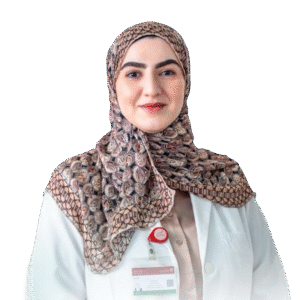
Dr. Bushra Zaqzouq, Dermatology Specialist at Al Aziziya Medical Center, provides diagnosis and treatment for common skin diseases including psoriasis, eczema, skin inflammation, and sensitivity.
Dermatology assessment can help distinguish psoriasis from eczema, dry skin, and other causes of scaling and guide an appropriate treatment and follow-up plan.
Dr. Huda Hussein Hassan and Psoriasis Assessment
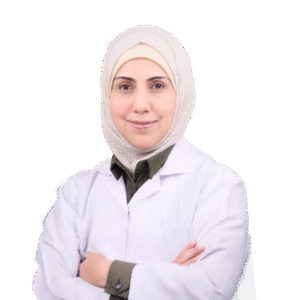
Dr. Huda Hussein Hassan, Dermatology Specialist at Al Aziziya Medical Center, provides diagnosis and treatment for common skin conditions including psoriasis, eczema, skin inflammation, and sensitivity.
Care is based on accurate diagnosis, skin type, disease severity, affected areas, and individual patient needs, with treatment adjusted according to response.
Controlling Psoriasis Starts With the Correct Diagnosis
Psoriasis is more than ordinary dry skin, while scaling alone does not automatically mean that a person has psoriasis. Eczema, dry skin, and several other dermatological conditions can look similar.
Accurate diagnosis, awareness of individual triggers, and adherence to appropriate treatment and skin care can help improve symptom control, while attention should also be paid to the nails and joints rather than the skin alone.
At Al Aziziya Medical Center in Doha, the Dermatology & Laser Department provides assessment and follow-up for psoriasis, eczema, and other skin conditions with care selected according to disease severity, location, and individual needs.