Root Canal Treatment in Doha: When Does a Tooth Need It and Can the Tooth Be Saved?
Learn when a tooth may need root canal treatment, the signs of dental pulp inflammation, how root canal treatment and retreatment are performed, and when a natural tooth may be preserved.
Tooth pain may begin as mild discomfort and later become severe enough to affect sleep, eating, and daily activities. In some cases, the cause may be superficial decay or temporary sensitivity, while in other cases inflammation or infection may reach the inner part of the tooth and require root canal treatment.
The purpose of root canal treatment is not to remove the tooth. When the tooth can be restored, treatment aims to preserve the natural tooth by cleaning the canals inside the roots, managing infected or inflamed tissue, and then protecting and restoring the tooth appropriately.
What Is the Dental Pulp?
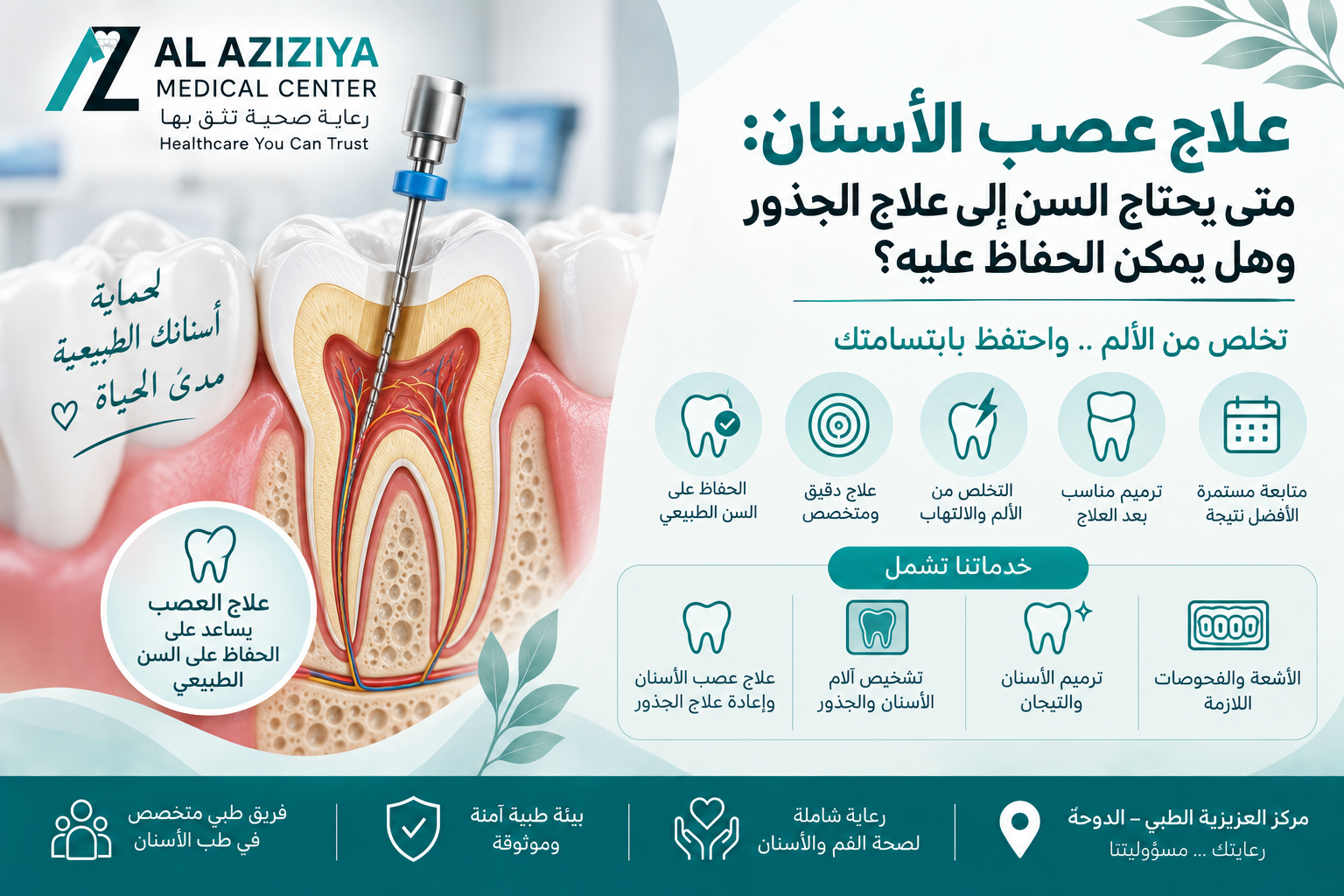
Inside each tooth is soft tissue containing nerves and blood vessels, commonly referred to as the dental pulp. When deep decay, inflammation, or trauma reaches this tissue, symptoms such as persistent pain, severe sensitivity, or pain when chewing may occur.
If the problem is not assessed in time, inflammation or infection may progress and affect the tissues surrounding the tooth. Early dental examination can help determine whether root canal treatment or another form of treatment is needed.
When Might a Tooth Need Root Canal Treatment?
A dentist may recommend root canal treatment when deep tooth decay reaches the pulp, when the pulp becomes inflamed or infected, after significant trauma to a tooth, or when a previously treated tooth develops a problem that requires reassessment.
The need for root canal treatment cannot be determined from pain alone. Some severely affected teeth may cause relatively little pain, while severe toothache can sometimes have other causes. Clinical examination and dental imaging help determine the appropriate diagnosis.
Signs That May Indicate a Dental Pulp Problem
- Severe or persistent tooth pain.
- Pain when biting or applying pressure to the tooth.
- Strong sensitivity to hot or cold that continues after the stimulus is removed.
- Swelling or inflammation of the gum around the tooth.
- A noticeable change in tooth color.
- A small swelling or opening in the gum near the affected tooth.
- An unusual taste or recurring discomfort in the area.
These symptoms do not automatically mean that root canal treatment is required, but they are reasons to have the tooth examined so the underlying cause can be identified.
Does Every Toothache Require a Root Canal?
No. Tooth pain may be caused by early decay, tooth sensitivity, gum inflammation, a problem with a filling, tooth grinding, or several other conditions.
Some cases may only require treatment of the decay and an appropriate filling, while others may require root canal therapy. Identifying the cause is therefore the most important step before treatment, and relying on pain medication for long periods without diagnosis can delay appropriate care.
How Is the Need for Root Canal Treatment Diagnosed?
The dentist begins by reviewing the symptoms and how long they have been present, followed by examination of the tooth and surrounding gum. Tests may also be used to assess the tooth's response depending on the clinical situation.
Dental X-rays can help evaluate the roots and surrounding bone and identify deep decay or signs of infection. Based on the findings, the dentist determines whether the tooth requires root canal treatment, retreatment of a previous root canal, restoration, or another treatment.
What Happens During Root Canal Treatment?
The details vary according to the tooth, the number of root canals, and the extent of infection. In general, treatment involves accessing the canals within the roots, cleaning and disinfecting them, removing affected tissue, and sealing the canals appropriately.
After root canal treatment, the tooth usually requires an appropriate restoration to restore function and provide protection. The type of restoration depends on the amount of tooth structure remaining, the location of the tooth, and the chewing forces placed on it.
Is Root Canal Treatment Painful?
The aim of root canal therapy is to treat the source of pain and inflammation. Treatment is generally performed using local anesthesia, although the experience during and after treatment can vary depending on the condition of the tooth and the severity of inflammation.
Some patients may experience temporary tenderness or discomfort after treatment, particularly when biting. The dentist provides aftercare instructions and explains when additional review may be needed.
Can the Natural Tooth Be Saved Instead of Extracted?
In many cases, root canal treatment can help preserve the natural tooth when enough healthy tooth structure remains and the tooth can be restored.
Keeping a natural tooth helps maintain chewing function and tooth alignment. However, the decision depends on the extent of damage, the condition of the roots and surrounding tissues, and whether the tooth can be predictably restored after treatment.
Does a Tooth Need a Crown After Root Canal Treatment?
Not every tooth requires the same type of restoration after root canal treatment. Some teeth may be restored with a filling, while others may require a crown or another stronger restoration, particularly when a substantial amount of tooth structure has been lost because of decay or previous fillings.
The final restoration is selected according to the tooth's position, the amount of remaining structure, and the forces placed on the tooth during chewing.
What Is Root Canal Retreatment?
A tooth that has previously received root canal treatment may sometimes require retreatment if symptoms return, infection persists, or a new problem develops.
In these cases, the previous treatment and root canals are reassessed to identify the cause and determine whether the tooth can still be preserved. Retreatment can be more complex than an initial root canal, which is why assessment by an endodontics specialist may be helpful in complex cases.
When Is Tooth Pain an Urgent Problem?
Prompt dental assessment is recommended when pain is severe and worsening, when significant swelling develops in the face or gums, or when the problem is associated with fever or difficulty opening the mouth or swallowing.
A broken or traumatically injured tooth should also be examined even if pain is initially mild because some injuries to the dental pulp may not cause immediate symptoms.
Dr. Alaa Abdullah Jaja and Root Canal Treatment at Al Aziziya Medical Center
Al Aziziya Medical Center in Doha includes Dr. Alaa Abdullah Jaja, an Endodontics Specialist who provides focused care for dental pulp and root canal conditions with an emphasis on preserving natural teeth whenever clinically possible.
His services include root canal treatment, root canal retreatment, diagnosis and treatment of dental pulp pain and infection, management of teeth affected by deep decay or trauma, removal of broken posts or fragments from root canals when clinically appropriate, and assessment of tooth restoration after root canal treatment.
Root Canal Treatment at Al Aziziya Medical Center Dental Department
The Dental Department at Al Aziziya Medical Center provides integrated dental services including root canal treatment, restorative and cosmetic fillings, professional dental cleaning, restorations and crowns, together with other oral healthcare services.
Having multiple dental services within the same department supports a coordinated approach from diagnosis of the source of tooth pain through root canal treatment and final restoration of the tooth.
How Can You Reduce the Risk of Needing Root Canal Treatment?
Daily oral hygiene and regular dental examinations can help detect tooth decay before it progresses deeply toward the pulp. Treating broken fillings, dental injuries, and other oral health problems at an appropriate stage may also reduce the risk of more extensive damage.
Persistent tooth pain or sensitivity should not be ignored. Earlier diagnosis may allow simpler treatment and can help preserve as much healthy natural tooth structure as possible.
Early Diagnosis Can Help Preserve Natural Teeth
Root canal treatment is one of the procedures used to preserve affected teeth when inflammation or damage reaches the tissues inside the tooth. Earlier assessment of tooth pain can help identify the appropriate treatment and determine whether the tooth can be saved.
At Al Aziziya Medical Center in Doha, the Dental Department provides assessment and treatment for dental pain and root canal conditions, including specialist root canal treatment, retreatment, and restoration planning according to the needs of each case.