Iron Deficiency and Anemia in Children in Doha: Signs to Watch and When to See a Pediatrician
Learn about signs of iron deficiency and anemia in children, their relationship with nutrition, activity and growth, and when a child may need testing or pediatric assessment.
A child's energy, growth, and concentration are influenced by many factors, including balanced nutrition and adequate intake of essential nutrients. Iron is particularly important because it is required for the production of hemoglobin, the protein responsible for carrying oxygen to tissues throughout the body.
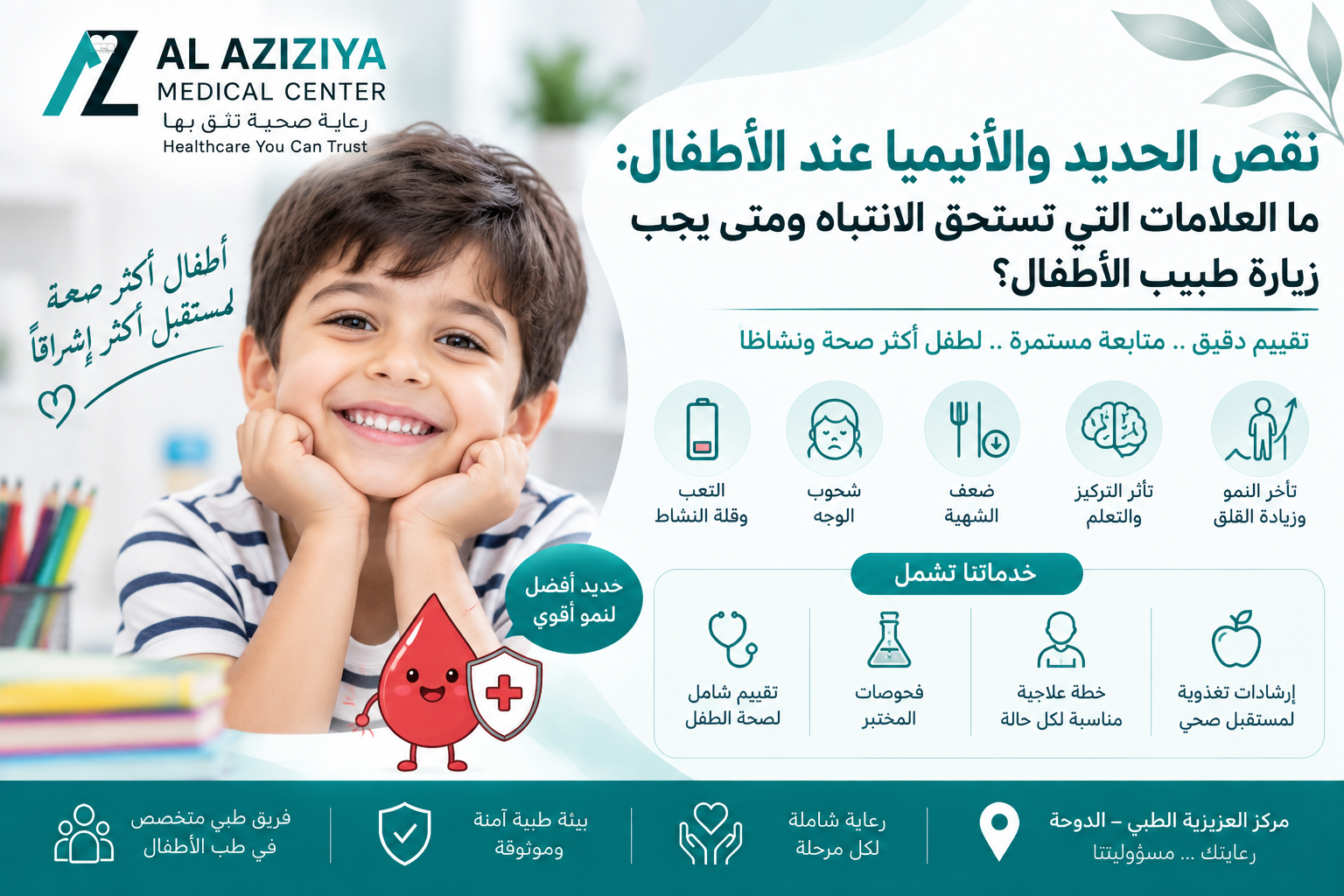
Iron deficiency may initially develop without obvious symptoms. Over time, some children may show signs such as tiredness, pale appearance, reduced appetite, or decreased activity. However, these symptoms are not specific to iron deficiency, so diagnosis should not be based on symptoms alone.
What Is Iron Deficiency in Children?
Iron deficiency occurs when a child's body does not have enough iron to meet its needs or when iron stores become low. If the deficiency progresses and affects hemoglobin production, iron deficiency anemia may develop.
Children's iron requirements vary with age and growth stage, so dietary history, growth assessment, and medical history are important parts of evaluating the condition.
What Signs May Appear in a Child?
Parents may notice that a child is less active than usual, tires more easily, looks pale, or has a reduced appetite. Some children may experience difficulty concentrating or a decline in their usual daily activity when the deficiency becomes more significant.
Symptoms can also be mild or unclear, particularly in the early stages, and they overlap with many other conditions. One symptom alone therefore does not confirm anemia.
Why Can Iron Levels Become Low?
One possible cause is inadequate intake of iron-rich foods, particularly during periods of rapid growth when the body's nutritional requirements increase.
Other causes may relate to iron absorption, blood loss, or certain health conditions. Giving iron supplements without identifying the cause is therefore not appropriate for every child.
Can an Active Child Still Have Iron Deficiency?
Yes. A child with iron deficiency does not always appear tired throughout the day. Children may continue to play and remain active, especially during earlier stages of deficiency.
The overall picture is more important, including growth, appetite, activity, sleep, nutrition, and any recurring symptoms.
Does Pale Skin Always Mean Anemia?
Paleness can be one sign that prompts consideration of anemia, but it is not enough to make a diagnosis. Skin appearance varies naturally, and some children with anemia may not appear noticeably pale.
If paleness occurs together with persistent tiredness, poor appetite, reduced activity, or other symptoms, pediatric assessment may be useful.
What Is the Relationship Between Nutrition and Iron Deficiency?
A balanced diet plays an important role in providing iron and other nutrients needed during childhood growth. Iron is present in different foods, and its absorption varies according to the type of food and overall composition of the meal.
A very limited or selective diet may reduce the variety of nutrients a child receives. Dietary habits and typical meals may therefore be reviewed as part of pediatric assessment.
Should a Child Take Iron Supplements Without Testing?
Iron supplements should generally not be started simply because iron deficiency is suspected. The appropriate dose and duration depend on the child's age, condition, and severity of deficiency.
Symptoms of iron deficiency may also resemble other conditions, so medical assessment and appropriate testing can help confirm the diagnosis and guide treatment.
What Tests Might a Child Need?
The doctor determines which investigations are appropriate according to the child's age, symptoms, medical history, and clinical examination. Testing may include a complete blood count and selected tests that help assess iron status and iron stores.
Not every child needs the same group of tests. Investigations are most useful when chosen according to the clinical situation rather than performed routinely without a clear reason.
Can Anemia Affect Concentration and Activity?
When anemia is significant, a child may become tired more quickly because the blood has a reduced ability to carry oxygen efficiently to the body's tissues. This may affect activity and concentration in some children.
However, reduced concentration and energy have many possible causes. A broader assessment can help determine whether iron deficiency is contributing to the problem.
When Should a Child See a Pediatrician?
Pediatric assessment is advisable when a child has persistent tiredness, noticeable paleness, reduced appetite, lower-than-usual activity, or when growth or weight gain does not appear to be progressing as expected.
Follow-up may also be important when symptoms repeatedly occur without an obvious explanation or when a child has previously been diagnosed with iron deficiency or anemia.
What Happens If Iron Deficiency Is Diagnosed?
The treatment plan depends on the child's age, the severity of the deficiency, and the underlying cause. Management may include dietary changes and iron supplementation when prescribed by the doctor, together with follow-up testing when appropriate.
Parents should follow the prescribed dose and duration and avoid changing or stopping treatment without medical advice, as restoring iron stores may take time even after some symptoms improve.
Does a Child Need Follow-Up After Anemia Improves?
In some cases, yes. Follow-up can be particularly important when the original deficiency was significant or when the underlying cause needs ongoing attention.
The doctor may repeat selected laboratory tests to confirm that hemoglobin and iron stores are improving and may also review diet, growth, and the risk of recurrence.
Prevention Begins With Nutrition and Routine Follow-Up
Providing a varied and balanced diet helps support a child's nutritional needs during growth. Routine pediatric visits also provide an opportunity to review weight, height, development, appetite, and activity.
Prevention does not mean that every healthy child requires repeated blood tests. Instead, attention to growth, nutrition, and persistent symptoms can help identify when medical evaluation is appropriate.
Iron Deficiency and Anemia Assessment at Al Aziziya Medical Center
The Pediatrics Department at Al Aziziya Medical Center in Doha provides child healthcare including routine assessments, growth and development monitoring, and evaluation of health concerns that may arise during childhood.
When iron deficiency or anemia is suspected, assessment may include reviewing symptoms, nutrition, and growth before determining which laboratory tests are appropriate.
Al Aziziya Medical Center also provides medical laboratory services, allowing requested investigations to be coordinated with clinical assessment and follow-up when needed.
Why Is Growth Monitoring Important?
Monitoring height, weight, activity, and appetite does more than assess nutrition. It provides a broader picture of the child's overall health and development.
Changes in growth, energy, or appetite may sometimes prompt the doctor to review dietary habits or consider additional investigations. Routine pediatric visits therefore support both treatment and early identification of possible concerns.
Correct Diagnosis Is More Important Than Symptoms Alone
Tiredness, pale appearance, or poor appetite do not automatically mean that a child has anemia. However, persistent symptoms that affect the child's activity or growth deserve appropriate medical assessment.
At Al Aziziya Medical Center in Doha, pediatric care can be supported by laboratory testing when needed to help assess iron deficiency and anemia and monitor improvement.