
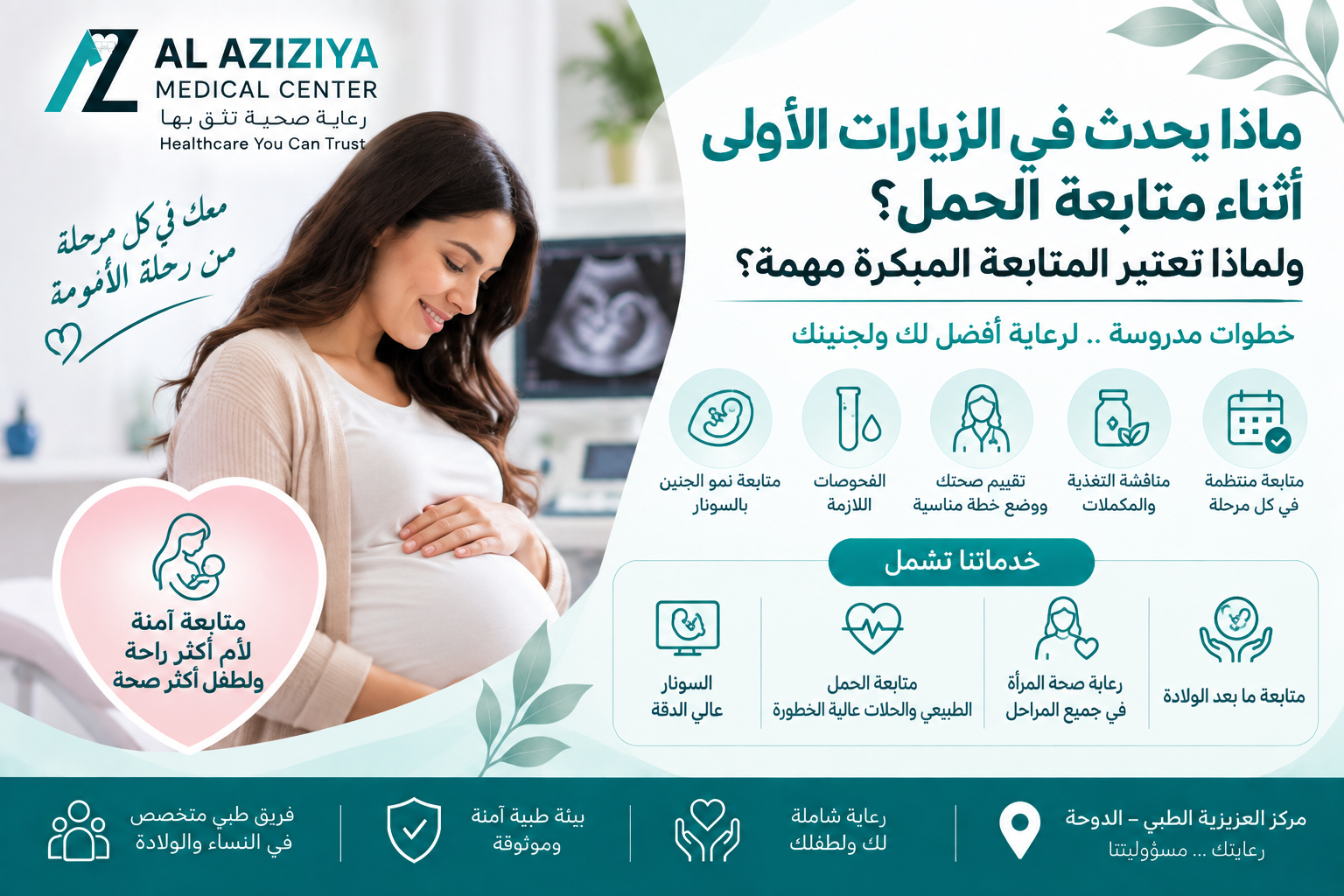
Pregnancy Follow-Up in Doha: What Happens at the First Visits and Why Is Early Care Important?
Learn what happens during early pregnancy follow-up, including ultrasound, laboratory tests, blood pressure and weight monitoring, and when symptoms such as bleeding or severe nausea need medical assessment.
Early pregnancy often begins with a mixture of excitement, questions, and understandable concern. One of the important steps in starting pregnancy care is arranging early follow-up with an obstetrics and gynecology physician.
Early pregnancy visits are not limited to confirming pregnancy. They provide an opportunity to review the mother's health, monitor pregnancy development, assess medical history, and identify factors that may require additional attention from the beginning.
The follow-up plan differs from one woman to another depending on age, medical history, chronic conditions, previous pregnancies, and the characteristics of the current pregnancy.
When Should Pregnancy Follow-Up Begin?
It is generally useful to arrange pregnancy follow-up during the early weeks after pregnancy is confirmed, particularly when there are symptoms requiring assessment or a medical history that calls for closer monitoring.
An early visit allows the doctor to review medical history, estimate the stage of pregnancy, discuss medications and supplements, and determine appropriate investigations and follow-up.
What Happens During the First Pregnancy Visit?
The first visit usually includes a review of medical and gynecological history, menstrual cycles, chronic diseases, previous procedures, previous pregnancies when applicable, and current medications and supplements.
The doctor may then assess general health, including blood pressure and weight, and determine which laboratory tests are appropriate. Ultrasound may also be performed when appropriate for the stage of pregnancy or when clinically indicated.
The visit is also an opportunity to discuss symptoms such as nausea, pain, bleeding, or unusual fatigue and determine whether additional assessment is needed.
Why Is Ultrasound Important in Early Pregnancy?
Ultrasound is an important tool in pregnancy follow-up. Depending on the stage of pregnancy, it can help assess the location and estimated gestational age of the pregnancy and provide information about its development.
What can be seen on ultrasound depends on the timing of the examination, so some patients may need a repeat scan later to obtain clearer information.
The timing and type of ultrasound are therefore selected according to gestational age, symptoms, and medical history rather than using the same schedule for everyone.
Which Laboratory Tests May Be Requested Early in Pregnancy?
The doctor may request laboratory investigations according to the patient's medical history, condition, and stage of pregnancy to assess general maternal health and identify factors that require follow-up.
These may include a complete blood count, blood group testing, and other investigations selected according to individual needs.
Not every pregnant woman requires exactly the same tests at the same time, so investigations should be guided by clinical assessment.
Why Is Blood Pressure Monitoring Important During Pregnancy?
Regular blood pressure measurement provides a baseline and allows changes to be monitored as pregnancy progresses.
Some blood pressure changes may occur without obvious symptoms initially, which makes routine measurements an important part of maternal follow-up.
Why Is Weight Monitored During Pregnancy?
Weight monitoring helps the doctor follow changes during pregnancy in the context of maternal health, nutrition, and gestational age.
There is no single amount of weight gain that is appropriate for every woman. Assessment depends on pre-pregnancy weight, medical history, and individual pregnancy factors.
Does Every Pregnancy Need the Same Follow-Up Schedule?
No. The frequency of pregnancy visits depends on the stage of pregnancy and the health of both mother and baby.
A stable pregnancy may follow a routine appointment schedule, while some patients require more frequent review or additional testing because of chronic disease, previous pregnancy complications, or new clinical findings.
The obstetrics physician determines the appropriate schedule for each patient.
Pregnancy With Chronic Conditions Requires Early Planning
If a pregnant woman has diabetes, high blood pressure, thyroid disease, or another chronic medical condition, early follow-up becomes particularly important for coordinating care.
Some patients may require care involving more than one medical specialty depending on the condition.
Medications should not be stopped or adjusted without medical advice simply because pregnancy has been confirmed. They should be reviewed with the treating physician.
What About Nutrition and Supplements?
Early pregnancy visits provide an opportunity to discuss nutrition and appropriate supplements according to medical history, pregnancy stage, and laboratory results when needed.
A balanced diet generally includes a variety of protein sources, vegetables, fruits, grains, and other essential nutrients.
Supplement requirements and doses can differ between women, so they are best discussed with the healthcare professional providing pregnancy care.
Nausea and Fatigue in Early Pregnancy
Nausea and fatigue are common during the early weeks of pregnancy, although their severity varies considerably between women.
Mild symptoms may often be managed with changes in diet, meal patterns, and rest according to medical advice.
However, severe nausea that prevents adequate food or fluid intake, or symptoms accompanied by significant weakness or repeated dizziness, should be medically assessed.
When Does Bleeding in Early Pregnancy Need Assessment?
Bleeding during pregnancy should be taken seriously, particularly when it is recurrent or accompanied by pain, dizziness, or other symptoms.
The cause cannot be determined reliably from the appearance of the bleeding alone, so medical assessment is important.
Heavy bleeding, severe pain, fainting, marked dizziness, or sudden severe symptoms require urgent medical attention.
What Changes as Pregnancy Progresses?
As pregnancy progresses, visits increasingly focus on fetal growth, maternal health measurements, investigations appropriate for each stage, and any new symptoms.
Follow-up can also include discussions about nutrition, activity, preparation for childbirth, and postpartum care at the appropriate stages of pregnancy.
What Is the Role of 3D and 4D Ultrasound?
The Obstetrics & Gynecology Department at Al Aziziya Medical Center provides ultrasound services, including 3D and 4D fetal ultrasound as part of its pregnancy care services.
The physician determines the timing and type of ultrasound according to gestational age, the purpose of the examination, and clinical needs.
Advanced ultrasound does not replace regular antenatal follow-up. It forms one part of a broader pregnancy care plan.
Why Is Early Pregnancy Follow-Up Important?
Early antenatal care helps create a clearer picture of maternal health and pregnancy from the beginning. It provides an opportunity to review medications and medical history, plan appropriate investigations, and establish a suitable follow-up schedule.
It also gives the patient an opportunity to discuss symptoms, nutrition, activity, supplements, and questions about pregnancy with her healthcare provider.
Pregnancy Follow-Up at Al Aziziya Medical Center
The Obstetrics & Gynecology Department at Al Aziziya Medical Center in Doha provides pregnancy follow-up from the early stages, including regular appointments, ultrasound, and laboratory investigations when indicated.
The department also provides monitoring for pregnancies that require additional attention and postpartum care, together with services for menstrual conditions, reproductive health, PCOS, and delayed conception.
Dr. Suzan Saud and Pregnancy Care
Dr. Suzan Saud, Obstetrics & Gynecology Specialist at Al Aziziya Medical Center, provides comprehensive antenatal and women's health care and has more than 20 years of experience in obstetrics and gynecology.
Her services include pregnancy follow-up throughout different stages, high-resolution ultrasound for fetal monitoring, reproductive health care, management of menstrual disorders, delayed conception assessment, patient education, childbirth preparation, and postpartum care.
Dr. Laila Ghalib Al-Salami and Pregnancy Follow-Up
Dr. Laila Ghalib Al-Salami, Obstetrics & Gynecology Physician at Al Aziziya Medical Center, provides pregnancy follow-up and women's health care together with routine gynecological assessment.
Her services include pregnancy follow-up, gynecological ultrasound when medically indicated, menstrual and PCOS care, reproductive health consultations, and family planning.
Early Follow-Up Provides a Clearer Picture of Your Pregnancy
Every pregnancy is different. Regular follow-up helps patients understand the changes occurring at each stage and allows medical concerns to be addressed at the appropriate time.
At Al Aziziya Medical Center in Doha, the Obstetrics & Gynecology Department provides pregnancy and women's health care with ultrasound, laboratory investigations, and medical follow-up selected according to the needs of each patient.