Dry vs Wet Cupping in Doha: What Is the Difference and What Precautions Are Needed?
Learn the difference between dry and wet cupping, important precautions related to medications, anemia and skin health, and what to consider before and after a cupping session.
Cupping is a traditional practice used by some people as a complementary approach for relaxation, muscle tightness, and certain types of pain. Despite its widespread use, cupping should not replace medical diagnosis or necessary treatment. It should be considered only after appropriate assessment and performed by a qualified practitioner using suitable hygiene and safety standards.
There are several forms of cupping. Dry cupping uses suction without breaking the skin, while wet cupping involves small superficial openings in the skin followed by limited blood removal. Wet cupping therefore requires additional precautions, particularly for people with anemia, bleeding disorders, or medications that affect blood clotting.
What Is Cupping?
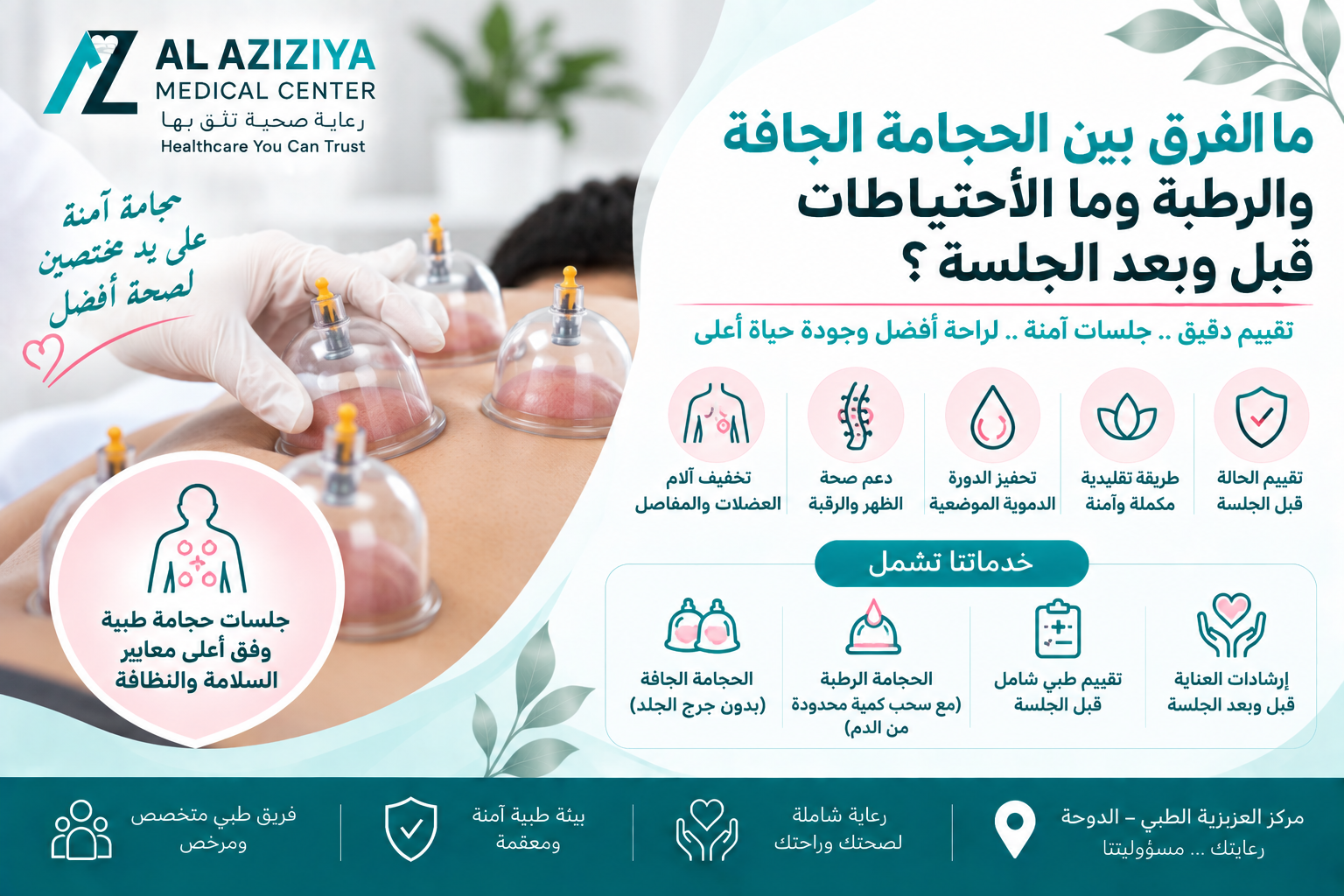
Cupping involves placing specially designed cups on the skin and creating negative pressure that temporarily pulls the skin and superficial tissues into the cup.
Round red or purple marks may develop where the cups were placed and usually fade gradually over time.
Different techniques can be used, and the practitioner selects the approach and treatment areas after reviewing the patient's health and the purpose of the session.
What Is the Difference Between Dry and Wet Cupping?
Dry cupping involves suction only and does not intentionally break the skin. Some people use it as a complementary technique for relaxation and temporary relief of muscle tightness or discomfort.
Wet cupping includes additional steps in which small superficial openings are made in the skin before suction is used to draw a limited amount of blood.
Because blood is involved in wet cupping, infection-control measures, appropriate equipment, and safe disposal of blood-contaminated materials are particularly important.
Are the Benefits of Cupping Scientifically Proven?
Cupping has been studied for several health concerns, but the quality of available research varies and many studies have methodological limitations.
Some research suggests that cupping may help reduce certain types of pain for some people, but current evidence is not strong enough to consider it a replacement for conventional medical care.
It is therefore more appropriate to view cupping as a complementary option when suitable while continuing to investigate and treat the underlying cause of persistent symptoms.
Can Cupping Help With Neck, Back, or Muscle Pain?
Some people use cupping for muscle tightness and discomfort involving the neck, lower back, joints, or other areas, and some report temporary symptom relief.
However, severe or persistent pain, numbness, weakness, loss of strength, or pain following significant injury requires medical assessment to determine the cause.
Cupping should not delay diagnosis of a musculoskeletal, neurological, or spinal condition that requires specific treatment.
Can Cupping Be Used for Headaches or Migraines?
Some people use cupping as a complementary approach for headaches or associated muscle tension, but headaches have many possible causes and need assessment according to their pattern and accompanying symptoms.
A new and unusually severe headache, or a headache accompanied by weakness, numbness, visual disturbance, difficulty speaking, severe vomiting, or sudden neurological symptoms requires urgent medical assessment.
Who Needs Assessment Before a Cupping Session?
All chronic conditions, medications, and supplements should be disclosed before a session.
Particular care may be needed before wet cupping when a person has:
- Anemia or significant iron deficiency.
- A bleeding or clotting disorder.
- Medication that affects blood clotting.
- Active skin infection, inflammation, or wounds in the intended area.
- A history of fainting with needles or blood draws.
- A chronic medical condition that may affect the safety of the procedure.
Pregnancy also requires specific medical consideration before complementary procedures, and cupping should not be undertaken during pregnancy without assessing whether it is appropriate for the individual situation.
What About Blood-Thinning Medication?
Medications that reduce blood clotting can increase the risk of bleeding or bruising, particularly with wet cupping because the skin is intentionally opened.
The healthcare professional and cupping practitioner should therefore be informed about these medications before a session.
Blood-thinning medication should never be stopped or adjusted without medical advice simply to undergo cupping.
What About Anemia and Iron Deficiency?
Wet cupping involves loss of a limited amount of blood, so additional caution is appropriate in people with anemia or significant iron deficiency.
It may be more appropriate in some cases to investigate and treat the cause of anemia and review blood test results before considering repeated wet cupping.
Repeated blood removal without appropriate assessment may contribute to anemia in susceptible individuals.
Can Cupping Be Performed on Any Area of Skin?
No. Cups and skin punctures should be avoided over wounds, active skin infections, or significantly inflamed areas.
Some skin conditions, including active eczema or psoriasis, may require additional caution because suction or skin injury can worsen irritation.
The skin should therefore be assessed before the treatment area is selected.
How Should You Prepare for a Cupping Session?
Tell the practitioner about your medical history, medications, supplements, allergies, previous cupping sessions, and any reactions you experienced.
You should also mention whether you tend to become dizzy or faint during blood tests, injections, or procedures involving blood.
There is no single food or fluid rule that applies to everyone. Follow appropriate clinical instructions and do not take unnecessary herbs or supplements or stop prescribed medication in preparation for cupping.
What Happens During Dry Cupping?
During dry cupping, cups are placed on the skin and negative pressure is created to temporarily draw the skin upward.
A pulling or tight sensation may occur, but severe pain, burning, or significant discomfort should be reported immediately.
What Happens During Wet Cupping?
Wet cupping combines suction with small superficial openings in the skin and removal of a limited amount of blood.
This requires careful infection control, suitable equipment, and safe handling and disposal of materials that come into contact with blood.
The person's risk of bleeding, fainting, and other complications should be considered before the procedure.
Are Cupping Marks Normal?
Round red or purple marks are common after cupping because suction affects the skin and small superficial blood vessels.
Some temporary local tenderness or soreness may also occur, and the marks generally fade gradually.
Severe pain, burns, worsening redness, warmth, swelling, discharge, or other signs of infection require assessment.
What Precautions Are Important After Cupping?
Follow the practitioner's aftercare instructions and keep treatment areas clean, especially following wet cupping because the skin surface has been opened.
Avoid scratching or disturbing the treated skin and monitor for increasing redness, swelling, or discharge.
Some people may experience temporary dizziness or fatigue, so standing up slowly and resting if lightheaded may be appropriate.
When Should You Contact a Doctor After Cupping?
Medical assessment is appropriate if signs of possible infection develop, including progressively worsening redness, increasing pain, warmth, swelling, discharge, or fever.
Bleeding that does not stop easily, repeated fainting, severe weakness, or other unusual symptoms after a session also require medical assessment.
How Often Can Cupping Be Repeated?
There is no single treatment interval that is appropriate for everyone.
Frequency depends on the type of cupping, the individual's health, the reason for treatment, and their response. More sessions do not necessarily mean greater benefit.
Additional caution is appropriate with repeated wet cupping because it involves both skin injury and blood loss.
Does Cupping Replace Physiotherapy or Medical Pain Treatment?
No. Persistent neck, back, or joint pain may require medical assessment, physiotherapy, medication, or other treatment depending on the diagnosis.
Cupping may be used by some people as a complementary option when appropriate, but it should not replace or delay necessary medical care.
Medical Cupping at Al Aziziya Medical Center
The Cupping Therapy Department at Al Aziziya Medical Center in Doha provides cupping services with attention to pre-session assessment, hygiene, infection control, and safety.
Department services include dry cupping and complementary cupping approaches used for selected cases of muscle tightness and neck, back, joint, or muscle discomfort, with suitability assessed according to the individual's health.
Licensed wet cupping is also available through the center's cupping practitioner with consideration of medical history, medications, and factors that may affect procedural safety.
Dr. Sarah Omar Al-Amin Ahmed and Medical Cupping
Dr. Sarah Omar Al-Amin Ahmed provides primary healthcare and cupping services at Al Aziziya Medical Center and is a licensed cupping practitioner by the Ministry of Public Health.
Her services include licensed wet cupping together with primary healthcare and chronic disease follow-up.
Medical assessment before cupping can help identify medications, chronic conditions, anemia, bleeding risks, and other factors that may affect whether the procedure is appropriate.
Safety Starts With Appropriate Assessment
Cupping is not a single procedure that is suitable for everyone, and assessment becomes particularly important with wet cupping because it involves opening the skin and removing a limited amount of blood.
Reviewing medical history and medications, examining the skin, choosing a qualified practitioner, and maintaining appropriate infection-control standards are important steps in reducing risk.
At Al Aziziya Medical Center in Doha, the Cupping Therapy Department provides cupping in an organized clinical setting with assessment before treatment and selection of an appropriate approach according to individual needs.