
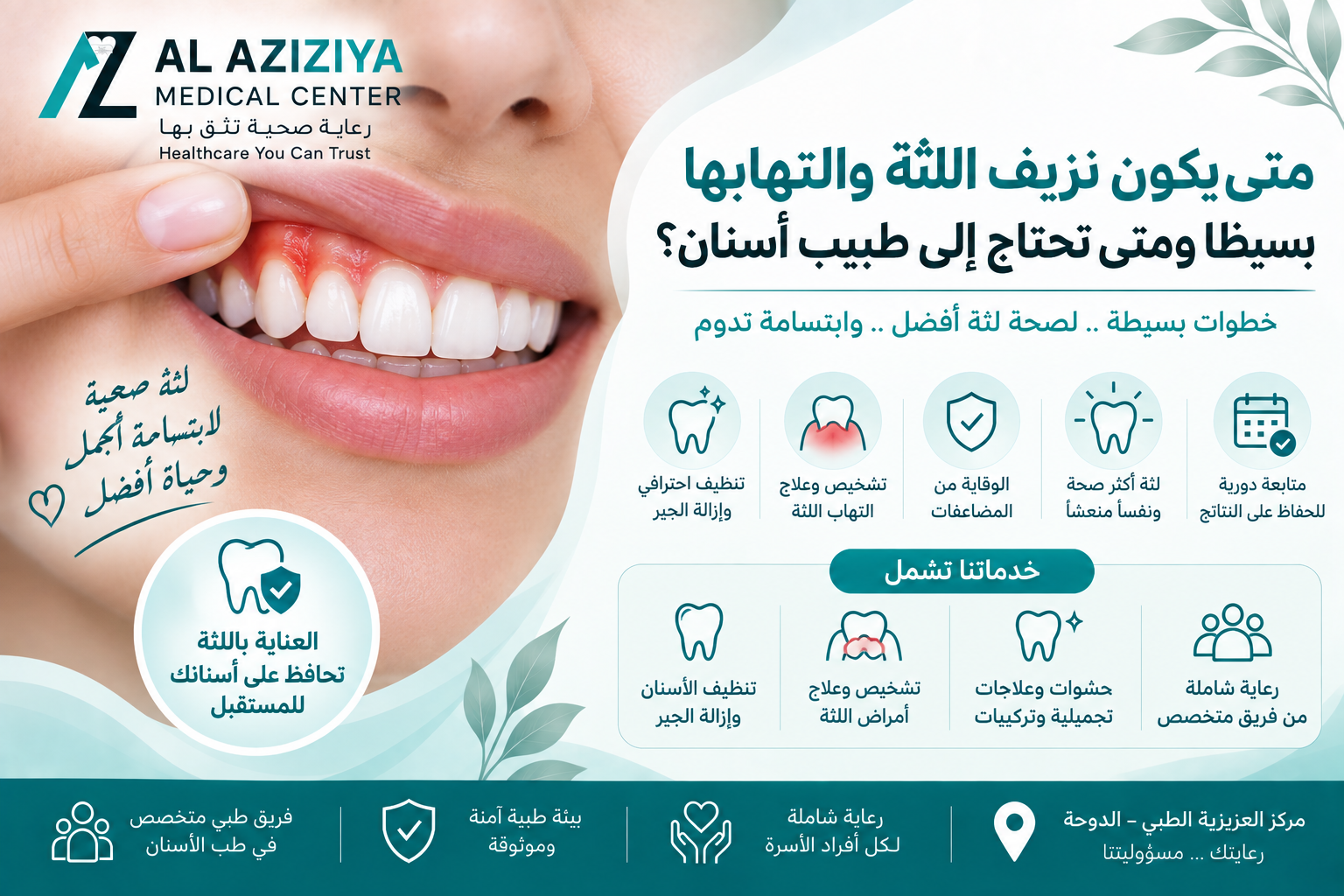
Bleeding Gums and Gingivitis in Doha: When Is It Mild and When Should You See a Dentist?
Learn about common causes of bleeding gums and gingivitis, how plaque and tartar affect gum health, and when professional cleaning or dental assessment may be needed.
Bleeding gums during tooth brushing are often ignored, particularly when the bleeding is mild or does not occur every day. However, recurrent bleeding may be a sign of gingival inflammation or plaque and tartar buildup and may deserve early dental assessment before the problem becomes more advanced.
Proper management of bleeding gums does not usually mean stopping tooth brushing because of the bleeding. Instead, the cause should be identified, daily oral hygiene should be improved, and professional cleaning or treatment should be provided when needed. Gum health is an important part of overall oral health.
Why Do Gums Bleed During Tooth Brushing?
One of the most common causes is plaque accumulation around the teeth and along the gumline. When plaque remains in these areas, the gums may become red, swollen, and more likely to bleed during brushing or flossing.
Bleeding may also occur when brushing is too aggressive or when flossing is restarted after a long period without using it. Persistent bleeding, particularly when accompanied by swelling or unpleasant breath, should not simply be assumed to be temporary.
What Is the Difference Between Gingivitis and More Advanced Gum Disease?
Gingivitis is an early stage of gum inflammation and may cause redness, swelling, and bleeding. It is generally easier to manage when identified early and when plaque and tartar contributing to inflammation are appropriately addressed.
If gum disease progresses over time, the tissues that support the teeth may become more significantly affected. Routine dental assessment can help identify gum problems earlier rather than waiting for more noticeable symptoms.
Can Tartar Cause Gum Inflammation?
When plaque is not removed regularly, it can harden into deposits that cannot be removed effectively with a toothbrush alone. These deposits near the gumline can make cleaning more difficult and may contribute to persistent inflammation.
Professional scaling and cleaning can remove plaque and tartar from areas that are difficult to manage with home oral care alone.
Should You Stop Brushing If Your Gums Bleed?
In most cases, stopping tooth brushing is not the solution because allowing plaque to remain can make gum inflammation worse.
It is important to use an appropriate toothbrush and gentle technique without excessive pressure. Persistent or heavy bleeding, painful gums, or significant swelling should be assessed by a dentist.
What Other Signs May Occur With Gingivitis?
Bleeding can occur together with redness, swelling, or gum tenderness. Some patients also notice persistent bad breath or an unusual taste in the mouth.
Changes in the shape or position of the gums may also develop in some conditions. Several persistent symptoms occurring together are a reason to seek dental assessment.
Can Bad Breath Be Related to Gum Disease?
Bad breath has several possible causes, but plaque buildup, tartar, and gum inflammation may contribute in some patients.
Mouthwash may temporarily mask the odor without treating the cause. A dental examination can help determine whether the source is related to the gums, teeth, or another condition.
How Are Gum Problems Assessed?
The dentist examines the gums and teeth for redness, swelling, bleeding, plaque, and tartar. Additional assessment may be required depending on the condition of the gums and the severity of the problem.
The dentist may also ask about brushing and flossing habits, symptoms, and how long they have been present because these details help identify factors that may be contributing to ongoing inflammation.
What Is the Role of Professional Dental Cleaning?
Professional dental cleaning is used to remove plaque, tartar, and surface stains from the teeth and areas close to the gumline.
It may be an important part of managing gingivitis when tartar accumulation is contributing to inflammation. However, professional cleaning alone is not always sufficient, as ongoing home care and additional treatment may be required depending on the condition.
Is Flossing Important for Gum Health?
A toothbrush cleans exposed tooth surfaces but may not effectively clean all spaces between teeth. Floss or other interdental cleaning methods can help remove plaque and food debris from these areas.
Mild bleeding can sometimes occur when flossing is restarted after a long period without use, but persistent bleeding should be assessed to check gum health and cleaning technique.
Can Mouthwash Treat Gingivitis?
Mouthwash may be used as a supportive part of oral care in selected cases, but it does not replace tooth brushing, interdental cleaning, or professional tartar removal when needed.
The appropriate product depends on the patient's condition. Diagnosis and effective daily plaque control remain the main foundation of gum care.
When Should You See a Dentist Promptly?
Dental assessment should not be delayed when bleeding is frequent or heavy or is associated with severe pain, significant swelling, discharge, or tooth mobility.
Persistent bad breath or noticeable changes in the appearance of the gums also deserve evaluation. Sudden unusual bleeding or the use of medications that may affect bleeding should be discussed with the dentist.
How Can You Maintain Healthy Gums at Home?
Brushing twice daily using a gentle and consistent technique can help reduce plaque accumulation. Cleaning between the teeth and avoiding excessive pressure on the gumline are also important.
Regular dental visits can help detect tartar accumulation or gum inflammation earlier, especially in people who experience repeated gum bleeding or frequent tartar buildup.
Does Smoking Affect Gum Health?
Smoking can negatively affect oral and gum health and is associated with an increased risk of problems involving the tissues that support the teeth.
The dentist should know about smoking habits when assessing gum health because this information forms part of the overall clinical picture.
Bleeding Gums During Pregnancy
Some women notice gum changes during pregnancy, including increased sensitivity or easier bleeding. Pregnancy does not mean that persistent gum bleeding should simply be ignored.
Good oral hygiene remains important, and persistent symptoms should be discussed with a dentist. The dental team should also be informed about pregnancy and any relevant medical information before treatment.
Gum Care at Al Aziziya Medical Center
The Dental Department at Al Aziziya Medical Center in Doha provides oral and gum healthcare services including professional teeth cleaning, scaling, and assessment and treatment of gum disease, together with other restorative and aesthetic dental services.
Management of bleeding gums begins by identifying the cause and assessing the degree of inflammation and the overall condition of the teeth and gums. The dentist can then determine whether professional cleaning, improved daily oral care, or additional treatment is appropriate.
When Is Professional Teeth Cleaning Important?
Professional cleaning may be particularly useful when plaque and tartar deposits cannot be removed through brushing and flossing alone or when buildup is associated with gum bleeding and inflammation.
The dentist determines the appropriate type of cleaning after examination and can also provide guidance on brushing and interdental cleaning to help reduce recurrent buildup.
Healthy Gums Are Part of a Healthy Smile
Bleeding gums should not automatically become accepted as a normal part of brushing. When bleeding repeatedly occurs, identifying the cause early can help prevent progression and guide appropriate care.
At Al Aziziya Medical Center in Doha, the Dental Department provides assessment and treatment for gum concerns, including professional cleaning and tartar removal, with the aim of supporting the health of the teeth and surrounding tissues.